

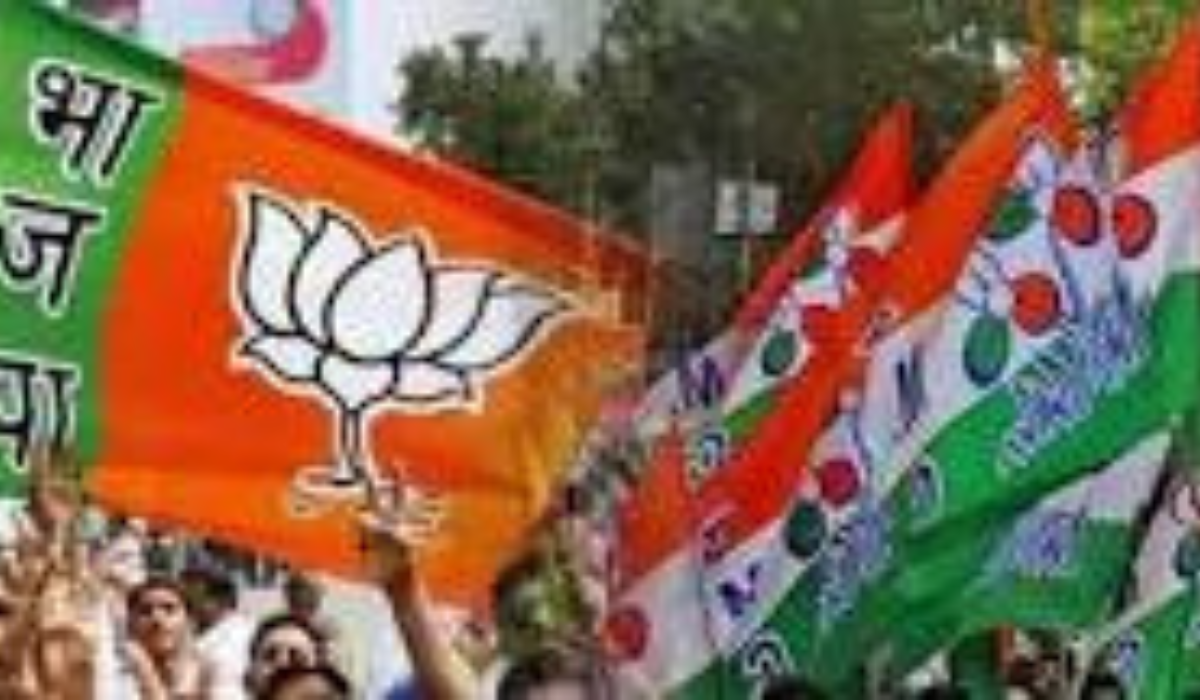
India’s Political Calendar Set for a High-Stakes Year
The year 2026 is shaping up to be a crucial phase in Indian politics, with multiple state elections, civic polls, and by-elections expected to influence national discourse. After a politically intense 2025, marked by surprise polls, voter verification debates, and allegations of electoral misconduct, the coming year promises even sharper contests and louder campaigns.
Elections in Maharashtra, West Bengal, Assam, Tamil Nadu, and Kerala are likely to dominate headlines, while by-polls in states such as Goa, Karnataka, Uttar Pradesh, Manipur, Nagaland, and Tripura will also take place, though without significantly threatening existing power structures.
Maharashtra Begins the Election Cycle
Mumbai Civic Polls Take Centre Stage
The political year will begin with municipal elections in Maharashtra on January 15, including the long-pending Brihanmumbai Municipal Corporation (BMC) elections, widely regarded as the richest civic body contest in India.
The battle will primarily be between the BJP-led Mahayuti alliance and the opposition Maha Vikas Aghadi (MVA), which includes the Congress, NCP, and Shiv Sena (Uddhav faction).
Family Politics Dominate Mumbai and Pune
One of the defining narratives of these elections is the re-emergence of political family alliances:
-
In Mumbai, cousins Uddhav Thackeray and Raj Thackeray are set to reunite politically after two decades.
-
In Pimpri-Chinchwad, veteran leader Sharad Pawar and his nephew Ajit Pawar appear to be mending ties following their 2023 split.
At stake is not just civic control, but the legacy of Bal Thackeray, currently contested between Uddhav Thackeray and Maharashtra Chief Minister Eknath Shinde.
Meanwhile, the Congress party finds itself increasingly marginalised in the state, weakened by internal disagreements and its refusal to align with Raj Thackeray following recent controversies.
A strong BJP performance—backed by its success in recent panchayat elections—could further consolidate its dominance and raise questions about the future relevance of its allies.
Eastern India: The Bengal and Assam Battles
West Bengal: Mamata Banerjee’s Toughest Test Yet
After Maharashtra, political focus will shift to West Bengal, where Chief Minister Mamata Banerjee faces another aggressive challenge from the BJP.
Having defeated the BJP in multiple elections since 2019, Banerjee is positioning herself as a defender of federalism and civil rights, frequently clashing with the Centre on issues like voter re-verification, Waqf law amendments, and governance autonomy.
The BJP, on the other hand, continues to target her government over corruption allegations, border security, nepotism, and women’s safety. Analysts believe this election could elevate Banerjee’s profile as a national opposition leader, potentially strengthening her role within the INDIA alliance ahead of the 2029 Lok Sabha elections.
Assam: A Complex Political Equation
In neighbouring Assam, Chief Minister Himanta Biswa Sarma remains one of the BJP’s most influential regional faces. However, issues such as ethnic representation, tribal dynamics, Citizenship Amendment Act implementation, and concerns over illegal migration could complicate the contest.
The opposition’s success will depend on whether it can unite fragmented regional voices into a credible alternative narrative.
Southern States: Tamil Nadu and Kerala in Focus
Tamil Nadu: A New Political Challenger Emerges
The BJP has historically struggled in Tamil Nadu, a state dominated by Dravidian politics and the rivalry between the DMK and AIADMK.
However, the 2026 election brings a new factor: popular actor Vijay and his party, Tamilaga Vettri Kazhagam. Seen as a dark horse, Vijay has clearly defined his stance—calling the DMK his political enemy and the BJP his ideological rival, while maintaining a cautious approach toward the AIADMK.
For the AIADMK, already weakened by repeated defeats to Chief Minister MK Stalin, another loss could deepen internal rifts and leadership challenges.
Kerala: Can History Be Broken?
In Kerala, Chief Minister Pinarayi Vijayan and the Left Democratic Front (LDF) are aiming for a rare third consecutive term, something never achieved before in the state.
However, the Congress-led United Democratic Front (UDF) enters the contest with renewed confidence after strong local body poll results in late 2025. Allegations of corruption and controversies within the state’s film industry have added pressure on the ruling government.
Congress leader Priyanka Gandhi Vadra, now representing Wayanad, is expected to play a key role in the campaign.
The BJP, though traditionally weak in Kerala, is slowly gaining ground after winning its first Lok Sabha seat in 2024 and capturing the Thiruvananthapuram municipal body.
A Stepping Stone to 2029
Why the 2026 Elections Matter
Individually, these elections reflect local political realities. Collectively, they serve as a testing ground for national strategies ahead of the 2029 general elections.
For the BJP, strong performances could reinforce its long-term dominance and begin conversations about leadership beyond Prime Minister Narendra Modi.
For the Congress and the INDIA bloc, the challenge lies in proving they can offer a united, credible alternative, translating state-level momentum into a national revival.
As India heads into 2026, the electoral map promises intense competition, shifting alliances, and high political drama—all setting the tone for the country’s democratic future.
Ahmedabad and Vadodara faced major disruption on Monday after hoax bomb threat emails from Khalistani terrorists abroad targeted several schools. Read more

Bullet Train Plans Spark Hope Beyond India’s Announced Corridors With the Union Budget announcing seven new high-speed rail corridors across Read more

Comfortable Travel Across the State Odisha Tourism has introduced a new caravan tourism service. This service allows tourists to explore Read more
NKS Leads Protest on January 28 The Navnirman Krushak Sangathan (NKS), a major farmers’ group in Odisha, has announced a Read more


